What to prepare before a home repair visit.
A useful checklist for a clearer conversation with the right qualified provider—without assuming every repair is simple.
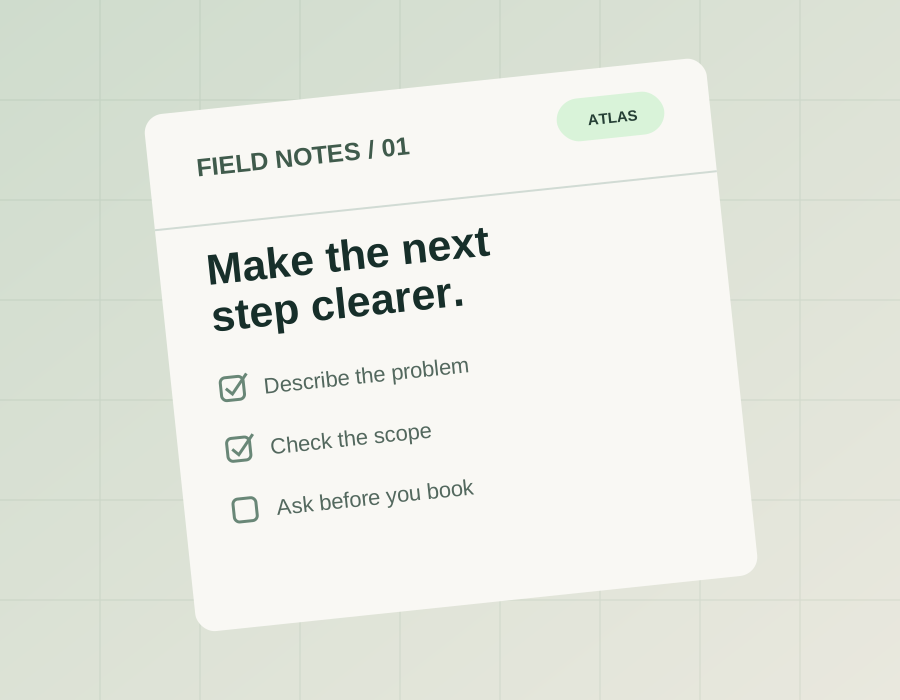
A successful repair begins before tools arrive. Describing the issue, documenting its symptoms, understanding site access and agreeing what will be assessed can reduce confusion for both the resident and the provider. This guide is not an inspection, quote or safety instruction. It is a preparation framework.
1. Describe what you can observe
Write down what you noticed rather than what you think the cause must be. Where is the problem located? When did it start? Is it constant or intermittent? What changed just before it appeared? If you can safely photograph a visible issue, do that before conditions change. Avoid opening electrical equipment, disturbing hazardous materials or taking apart systems to collect evidence.
- Location and visible symptoms.
- Time first noticed and frequency.
- Any changes in sound, smell, moisture, temperature or operation.
- Relevant appliance make or model, if safely accessible.
2. Separate urgent issues from routine planning
A dangerous situation is not a normal service-planning problem. Suspected gas leaks, sparking wires, severe water intrusion, structural instability, smoke, or other immediate threats require appropriate emergency or qualified professional assistance. Do not delay urgent action to finish a web checklist. Use local emergency procedures and professional advice.
3. Get clear about the service scope
Ask the provider whether the visit is diagnostic, an inspection or a repair. These are not always the same thing. Clarify whether there is a visit fee, what an initial assessment includes and when a written quote would be provided. Check qualifications, insurance and licensing as appropriate for the trade and location. Policies and protections differ by jurisdiction.
4. Prepare access without doing the repair
Ensure the relevant area is reasonably accessible and explain anything the provider should know in advance: stair access, pets, building access requirements or a system that is hard to reach. Keep children and pets away from potentially hazardous work areas. Do not move dangerous objects, tamper with electrical panels or shut down critical systems without appropriate knowledge.
5. Ask a few useful questions
- What is the visit intended to establish?
- Who will attend, and what qualifications do they have for this type of work?
- What fees apply for assessment, travel or cancellation?
- When should I expect a written scope and price estimate?
- If the issue changes or additional work is required, how will authorization be handled?
- What documentation or warranty, if any, will be supplied?
6. Compare scope, not only price
Two estimates may cover different tasks, materials, diagnostic methods or follow-up obligations. A lower number can be reasonable—or can omit something essential. Look for clear scope, assumptions, exclusions, timing, responsibility for making good and how unexpected work is agreed. Do not treat an online example price as a quote.
7. Keep a simple record
After the discussion, store any legitimate written scope, price terms and agreed follow-up together. If the provider identifies additional risks, seek appropriate qualified advice before authorizing work. The goal is to remember decisions accurately and avoid relying on an informal conversation.
One-page preparation checklist
- Issue and location described in plain language
- Safe photo or note available, if helpful
- Urgency and safety concerns identified
- Provider scope and qualification questions ready
- Access instructions prepared
- Written quote and authorization steps understood
About this article: WOW! by ZX7 authored this as part of a fictional SEO/content demonstration. It does not represent professional repair advice, an endorsement of a provider, a real campaign or actual search performance.